
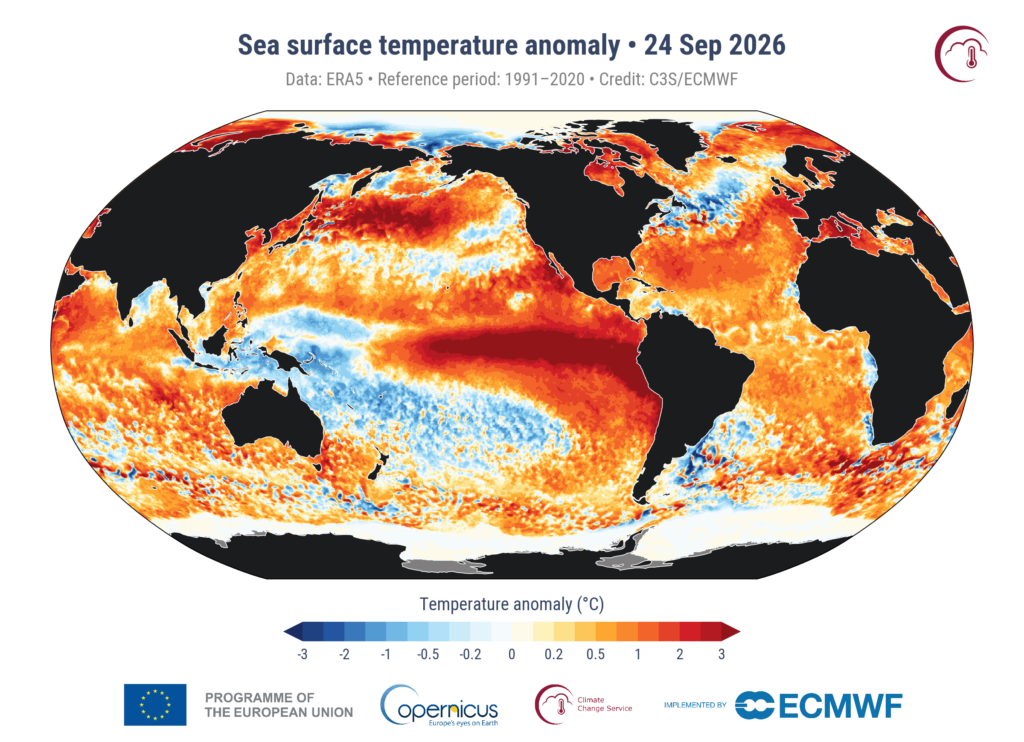
Beginning this week we are going to be reporting on impacts across the globe resulting from the developing El Niño. The global impacts provide the necessary context to our local monitoring and the need for what we call "no-regret preparedness".
California: coastal flooding and damaging waves
California declared a state of emergency on 21 September specifically to strengthen El Niño preparedness. The Governor’s office says California has already experienced coastal flooding attributed to El Niño, as El Niño-related Kelvin waves raise sea levels while Pacific hurricanes generate powerful waves along the coast. The California Coastal Commission is warning of increasing risks from large waves, flooding and erosion as the event strengthens.
Indonesia: severe drought and the worst wildfires in 11 years
This is probably the most striking current impact. Indonesia is experiencing its most intense wildfire season since 2015, with El Niño producing hotter and drier conditions that allow fires to spread much more aggressively. From 1 to 7 September, Indonesian wildfire emissions reached 19.7 million tonnes of CO2, more than one-third of global wildfire emissions during that period. In some affected areas air quality became hazardous, and Reuters subsequently reported more than 113,000 wildfire-related respiratory illness cases across seven provinces in just the first nine days of September.
Peru: flooding, transport disruption and impacts on fishing and agriculture
Authorities say El Niño is already affecting fishing and agriculture. Heavy rainfall linked to the event caused flooding in parts of Lima, disrupted roads and left freight trucks and passenger buses stranded, while access to Machu Picchu was also affected. Authorities estimate around 1.2 million people could ultimately be affected, with northern Peru facing flooding and mudslide risks while southern Andean regions could experience drought.
Australia: exceptional spring heat and extreme fire danger
Earlier this month Sydney reached around 33°C, nearly 13°C above average, during an unusually intense burst of spring heat. Authorities declared extreme fire danger and imposed a total fire ban across Greater Sydney. Reuters specifically reported the heat in the context of the powerful El Niño driving hotter and drier spring conditions across southern Australia.
Brazil: dangerous heat developing as spring begins
Brazil’s meteorological authorities have issued a red “great danger” heatwave warning covering eight states, including São Paulo, from 26 to 30 September. Temperatures are expected to remain at least 5°C above normal for five days or more, with health risks. Importantly for our attribution standard, Brazilian climate agencies are forecasting above-average temperatures across most of the country under the strong El Niño, and São Paulo’s Civil Defence says episodes of intense heat this spring will be influenced by the phenomenon.
What this means for the Garden Route
This week’s events show the different ways this extremely strong El Niño is impacting regional weather and exploiting local vulnerabilities in different regions of the world. This reinforces the value of our monitoring of the local rainfall, heat, fire water and severe-weather indicators on the Garden Route. Our first monitoring update for the Garden Route can be found in our September Climate Intelligence Briefing.